To start, I should let you know that as a fan of the Minnesota Vikings I feel especially qualified to provide history on the real deal. The Vikings that initially invaded Ireland were admittedly farmers and most likely didn’t wear much purple, but I’ll assume the differences stop there. (Before I worry you too much, most of the information in this blog comes from our knowledgeable tour Antoine, who is most likely not a Vikings fan and definitely knows a considerable amount of reliable history).
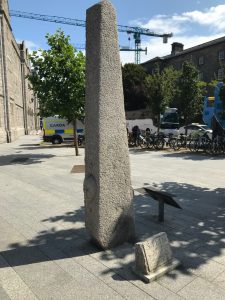
Fortunately for the Vikings of Scandinavia, they won in battle much more frequently than the football team wins on the field. In the case of Ireland, though, the Vikings were initially welcomed into the country and entered peacefully. They had chosen Ireland as a raid site because they’d heard that the monasteries on the island would be particularly easy to overwhelm. Looking back, it’s hard not to wonder if it was the open nature of the Irish that lead them to invite the Vikings in, or if they were aware of their weak defenses and actively preventing bloodshed. Regardless of why they were first welcomed, the Vikings stayed to control and shape Ireland for more than three hundred years after they initially landed in 795 AD.
In the 1916 Easter Rising Declaration the Irish people speak to their long history of oppression under foreign powers. In my view, that control started with the Vikings, the first time that an outside force constrained the freedom of the Irish. Irish culture today is fascinated with the Vikings; they’re commemorated in museums and public landmarks as major contributors to Ireland’s historical development. Yet at the same time that Viking heritage appears to be a source of pride in ways, one of Ireland’s most beloved figures was the high king Brian Boru, whose famous act was the defeat of the Vikings at The Battle of Clontarf.
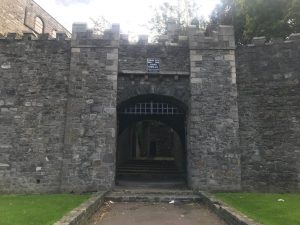
Ireland’s contrasting opinions on the Vikings brings up an interesting argument: the destructive and productive actions of foreign invaders are inextricably intertwined in history. Although Ireland’s political documents have long called for Irish people to unite against foreign forces, the heritage of Ireland itself depends upon the actions that past foreign forces took. Without the Vikings the cities of Dublin, Cork, Wexford, and Limerick may not exist. Traditional Irish artwork draws on the influence of Viking style because the two cultures became intertwined. The original public assembly of the Vikings, called The Thing, influenced opinions on popular sovereignty and democratic action across Europe.

As Antoine led our tour, his pride in his Irish heritage was evident. That sentiment remains strong across Ireland; Irish people feel deeply connected to their history and largely united against the idea of foreign control. While this argument bears legitimate merit, there’s also value in the recognition that a large part of the Irish experience depends directly on the reality and aftermath of invasions. The Vikings and Normans shaped today’s Ireland. They may have settled on the island originally because of its weak defenses, but as years passed, they laid the groundwork for a melding of cultures that lives on today. This reality rings true around the world: when different groups of people interact, they inevitably change each other. It’s this change and connection that defines the human experience around the world, and it’s that same connection that ties the Vikings eternally to Irish identity.