The Titanic was built in Belfast, Northern Ireland. It was said to be “as nearly perfect as human brains can make her”. Belfast has always been known for building the best and biggest ships. By 1912 Belfast’s output tonnage exceeded 200,000 tons, which made Belfast one of the largest and most important shipbuilding centers in the world. Building Olympic class ships was not an easy job. It took two years to complete all the alterations needed to accommodate building these massive ships; bigger slips at the harbor needed to be made, giant cranes needed to be ordered to be able to lift the parts onto the ships, there were also modifications made to the joiner shops. After all of the alterations were made it was finally time to start building the ships. The Titanic was made of four and a half tons of metal and was built by Belfast locals, who fulfilled the many different jobs needed. One necessary job was the hitter boy. His only job was to hit and hammer in nails, which was a very loud! The locals would work fifty-four hours a week and get paid little, but they were very proud of their work. Over 100,000 people watched the launch of the Titanic. The ship 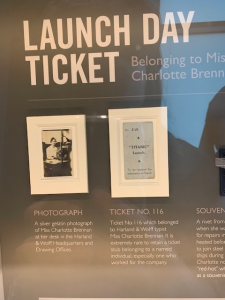 was so big that it was very difficult to get it onto the launch way. Once the Titanic was in the water it moved with incredible speed. It was said “She travelled almost twice her length in 62 seconds.” People at the launch were celebrating a job well done, Belfast, and their huge accomplishment. Building Olympic class ships like the Titanic had great economic benefits in Belfast. During the time the Titanic was built, there was a lot of tension in Ireland. Belfast was run almost exclusively by the rich Protestants. Throughout Irelands history, and during this time Irish Catholics were socially and legally discriminated against. In the 1700’s there were very harsh laws , called Penal Laws, discriminating against Catholics. This is partially why the Catholics were much poorer than the Protestants, and why the Protestants benefited more by the ship building industry in Belfast. By having a strong economy, the people were able to have a little more freedom and the poorer Catholics were able to take back some control over their lives during this economic boom. The Titanic museum was built to show what life was like in this time period
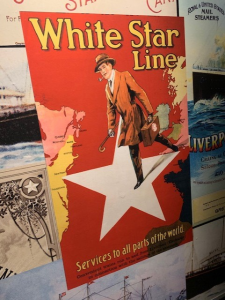 for all of the people in Belfast. It showcases how the Titanic was built, how it affected people during that time period, and also the emotional side of the tragedy. The museum was a three story, self-guided experience. It started by showing artifacts and advertisements for the Titanic. The second floor, and most of the museum talked about how the Titanic was built and the jobs that went into building such a ship. There was an exhibit that allowed us to ride in a “ship”, it showed us how that ship was built, and we heard interviews from people who built it. We walked through rooms that showed what the different class cabins look like and what launch day was like. The museum ended by talking about the wreck. We heard from the survivors who talked about what it was like to be on the Titanic, it was a very emotional exhibit. The museum was very interesting, it covered everything about the Titanic, it didn’t just focus on the crash. I learned a lot more about the background of the Titanic than I have before and really got a feel for what life was like in Belfast during the ship building days.