If we’re going to be totally honest, when I signed up for the “European Commission blog post,” I had no idea what the European Commission even was. However, I was the final person to sign up so my fate was sealed. I decided to embrace was ignorance with an open mind. About 10 minutes before departing for the excursion, I did a quick Internet search of “European Commission Dublin” and learned it had something to do with the European Union (EU.) After that, I was excited. I have always been interested in international affairs, and I know very little about how the EU actually functions for the countries in this system. My only real personal experience with European relations is hosting an exchange student from The Netherlands.
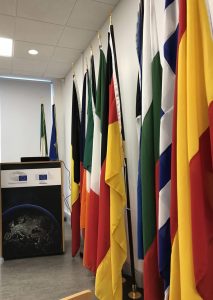
When we rolled up on-site, I was expecting a sprawling building with stone columns, dramatic staircases, and probably no air conditioning. However, their facilities were extremely modern and welcoming. We were seated in a large conference room with our host, Willem, at the front with a powerpoint presentation. I was filled with dread, especially when he mentioned he was an economist. I know nothing about the economy! I was anticipating a long, boring lectures filled with details far too complicated for my primitive mind to process. Luckily, I was completely wrong.
The presentation itself was incredible. Willem started off by giving us a brief overview of what the EU actually was and did, including member countries and main duties. To me, this was more than welcome. It was fascinating to learn the reasons candidate countries have for applying for admission to the EU, why some countries have never been permitted entry, and why some are not even candidates for application. I personally found it especially interesting that Norway has never become a member country, and that France has actually vetoed both the UK and Norway at some point.
I really enjoyed Willem as a host. First of all, it was clear from how he talked that Willem was deeply connected to and passionate about the EU. He had essentially devoted his life to this cause and was obviously a huge advocate for the goals of the EU. And he was Dutch! We love the Dutch. 🙂
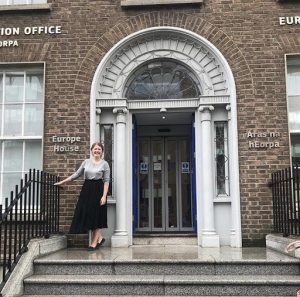
A concept I found particularly interesting and slightly controversial was how Willem explained sovereignty and how it relates to the EU. He explained that one of the biggest concerns nations have when considering applying to the EU is losing their sovereignty. But according to Willem, countries do not lose their sovereignty, they rather “share” it. What was curious to me about this statement is that some would classify “sharing” sovereignty as losing it; one cannot be sovereign if they must comply with the rules and regulations of any other foreign institution. Willem seemed insistent however that countries were just as free and in control of their own affairs whether or not they were in the EU. This seemed contradictory to some of the other information he offered however, as he explained the long and intense process they must go through in order to join (or attempt to join) the EU.
The application process for the EU is shockingly difficult. Obviously joining an international political and economic union is not simple, but the process nation’s must undertake before even considering applying is extensive. There are a few main criteria that all candidate countries must meet before applying for admission. First, the apply nation must be European. Morocco applied to EU and was denied on the basis of not being a European nation. Second, the applying country must be democratic, and must alter their laws to fit the views and practices of the EU, including a fierce protection of human rights and minority groups. Willem also made it clear that the EU ensures countries admitted also have a history of enforcing said laws. Finally, the member countries must have a functioning market economy and be able to accommodate large-scale commerce with the other members of the EU. With all these requirements and restrictions, it seems difficult to imagine candidate nations having much flexibility, but it seems to be a well-crafted system that is working well for the EU.
Overall, this visit was one of my favorites of the entire trip. Not only was it enjoyable, but also very informative. It was nice to get history on Ireland that wasn’t violent and tragic, like much of what we had learned about our host country. This visit helped me think about Ireland in a way that includes a broader European context, that includes the entire EU in economic, political, and social decisions and policies.