When thinking of Ireland, events such as the Great Famine, Home Rule and the Irish Civil War may come to mind. However, the impact of these events, both short term and long term, doesn’t create the same lasting impression. The biggest of these effects, mass migration of Irish citizens, is not as prominent.
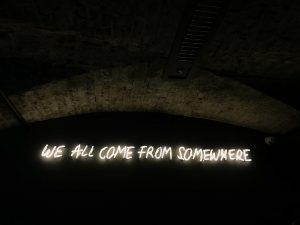
During our first week in Dublin, we made the trip to the EPIC Museum, a newly established exhibition dedicated completely to Irish migration. Opened in 2016, the museum is split into two large sections relating to Irish migration: why Irish people migrated in mass numbers, and what they have given the outside world.
After discussing, reading, and watching multiple pieces on the many hardships faced by the country of Ireland, two of these being the Great Famine and the long history of religious persecution, it was extremely interesting to see both the immediate and long lasting impacts on the Irish population. I was personally very intrigued by the first section of the display, regarding the main reasons Irish people migrated to countless countries in mass numbers. Many of these factors related extremely well to material covered in class, such as the famine and continued religious conflicts. It was extremely interesting and exciting to be able to expand on previous knowledge.
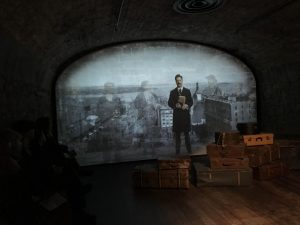
One specific exhibit within the EPIC Museum detailed the journeys of a select few whose stories were of significance. One of these was Abbé Thomas Quinn. Although he himself was not an Irish emigrant, his father was. His father traveled to Quebec amongst the famine in 1847, along with 98,000 other emigrants.This struck an immediate connection to class as we both discussed and watched Black 47, which although made for Hollywood, details the horrific conditions faced by the Irish population during the famine due to lack of jobs, resources, housing and ultimately, food. Although, as discussed in class, Ireland had more than enough food to supply to its people, this event forced 1.5 million Irish emigrants to the United States alone. Hearing stories such as Thomas Quinn’s, as well as Isabella McDougall, makes material and discussions covered in class regarding the famine come to life. McDougall was another specific migrant focused on. McDougall was sent to Australia with Earl Grey’s emigration program as a means to escape the famine and in turn become available as a wife for convicts living there. Despite the fact that I very much enjoyed the first section of the museum, as the museum transitioned into the second section, dedicated to the impacts of Irish migration on the world, I didn’t feel as enthused.
Although I was thoroughly enjoying learning about the main causes of Irish emigration, as the museum transitioned into the second portion, there was something that struck an off chord with me. It was the section dedicated to the spread of religion through Irish migration. Within this section, the museum focused on the spread of Catholicism and Christianity through Irish migration, but it seemed to take a white savior complex as it just briefly mentions the mainly African countries of which Irish migrants spread their religion to. However, it fails to mention the complex and already existing cultures, ideas, and morals these regions were already practicing. The idea and tone that through the spread of Irish beliefs and religions, they were bettering already areas with thriving cultures hit me the wrong way.
Overall, combined with both the negative and positive, I thought the EPIC Museum was a very interesting place to build on previous knowledge. I thoroughly enjoyed learning about Irish emigration and history and the short term and long term impacts it had on our global society in such an interactive and interesting form.