 On July 12, 1690, King William III and an army of 36,000 overtook the Jacobite army of 23,500 in the countryside of Ireland in a historically significant battle would be later called the Battle of the Boyne. Prior to this battle, James II was the king of England from 1685-1688 but was forced to step down as king due to external French and Irish pressure (History). As a result, King William III took his place on the throne. Angered by his abdication, James II attempted to overthrow King William III in the Battle of the Boyne. In an attempt to gain control over Ireland, the two armies met at River Boyne roughly 25 miles north of Dublin. However, this battle was more than just a fight over the crown –it was a fight over religion. King William III was a Protestant ruler favored by other European rulers of the time, and James II was a devout Catholic attempting to restore the Catholic faith throughout the land (History). The Battle of the Boyne was a turning point in Ireland’s political and religious history which Protestants throughout the island celebrate to this day.
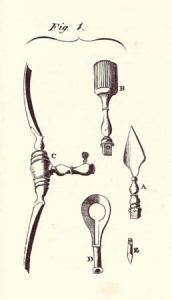
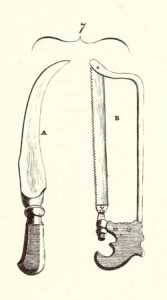 While many people talk about the battle strategy of each side and the military movements of the Battle of the Boyne, many people forget to tell the story of the doctors who tried to save wounded soldiers. Medical knowledge in the 17th century was extremely limited and little was known about infection and the importance of sanitation. Battle surgeons were not properly trained, yet they tried their best with the knowledge they had to save wounded soldiers. They used the combination of the amputation knife to cut the flesh of the soldier and the saw, to go through the bone, to remove unsalvageable limbs of wounded soldiers. For head injuries, the surgeons would use trephine to drill a hole into the skull in order to create more room for the brain to swell in order to heal itself ( Rogers). Lastly, they used bullet extractors to remove bullets and musket balls from the flesh of soldiers. With a very sharp tip, the surgeons would use the tool to manually drill into the wound and pull to bullet out. Moreover, with battle waging around them, doctors had too many soldiers to attend and lacked time to clean these instruments and the knowledge about the importance of clean instruments. Therefore, surgeons would use the same medical tools on multiple soldiers without cleaning the tools between each patient. Some medics would even hold the bloody instruments in their mouth in order to save time while switching between tools. The lack of sterile instruments caused infection to spread rapidly throughout the soldiers seeking medical treatment. Furthermore, doctors did not have access to sedatives during this time period, so soldiers would have to undergo procedures while being conscious. Soldiers used alcohol to subdue the pain, but as today’s doctors understand this would have caused more complications because alcohol is a blood thinner. Overall, undergoing medical treatment in the 17th century was extremely risky and few survived the initial surgery or were free from infection in the post-operative care, but with the help of these surgeons hundreds of wounded soldiers were still able to survive the Battle of the Boyne.
Work Cited
“History – The Battle of the Boyne.” BBC, BBC, www.bbc.co.uk/history/events/battle_of_the_boyne.
Rogers, Kara. “7 Scary Surgical Instruments, Then and Now.” Encyclopædia Britannica, Encyclopædia Britannica, Inc., www.britannica.com/list/7-scary-surgical-instruments.
Caption: Photo of trephine design. Image by Kara Rogers.
Photo of amputation knife and saw. Image by Kara Rogers.